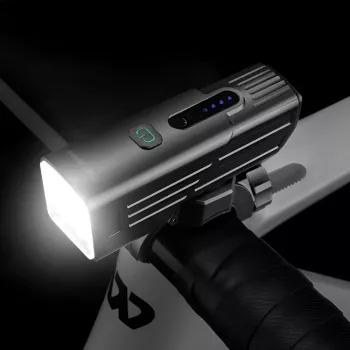
A dependable bike light needs to stay bright through sudden rain, dim parking garages, and nighttime commutes. An intelligent light with a light sensor helps maintain visibility by adjusting output as conditions change, while waterproof construction keeps the system working when the weather turns. For riders who deal with mixed conditions—sunny stretches that suddenly dip into tree cover, or a dry start that ends in rain—this combination can make day-to-day riding feel more predictable and safer.
Traditional bike lights do one job: stay at the brightness you set until you switch modes or the battery fades. Intelligent lights add a layer of “set it and ride” convenience by responding to what’s happening around you.
For broader safety guidance beyond equipment, the National Highway Traffic Safety Administration’s bicycle safety page is a solid baseline for visibility and riding practices: https://www.nhtsa.gov/road-safety/bicycle-safety.
Not all “water-resistant” or “smart” lights behave the same. A few practical checks can help match a light to how and where you actually ride.
| Riding situation | Helpful modes/features | Why it matters |
|---|---|---|
| Rainy commute | Waterproof build, stable mount | Reduces mid-ride failures and keeps the beam pointed correctly |
| Mixed lighting (trees, tunnels, dusk) | Light-sensing auto adjustment | Avoids under-lighting in dark patches and over-lighting in bright areas |
| Daytime traffic | High-visibility flashing mode | Improves noticeability to drivers |
| Long rides | Lower steady mode, efficient sensor control | Extends runtime while keeping adequate visibility |
| Urban streets | Multiple modes + easy on/off access | Quick switching for intersections, bike lanes, and shared paths |
For a deeper breakdown of how to choose lumen output and where lights matter most (being seen vs. seeing the road), REI’s overview is a helpful reference: https://www.rei.com/learn/expert-advice/bike-lights.html. For additional notes on visibility and night riding practices, AAA’s bicycle safety resources are also useful: https://exchange.aaa.com/safety/bicycle-safety/.
Light sensing works best when the sensor can “read” ambient conditions accurately—and when the light is aimed in a way that supports both visibility and courtesy.
If the goal is straightforward reliability—especially in variable weather—Waterproof 5-Mode Intelligent Bicycle Light with Light Sensing Technology is a practical option. It’s designed for wet-weather riding, includes five modes for flexible use, and uses light sensing to adjust output as ambient light changes. For commuters and recreational riders, that “auto-adjust” behavior can reduce fiddling at exactly the moments when attention should stay on traffic and road conditions.
| Item | Details |
|---|---|
| Product | Waterproof 5-Mode Intelligent Bicycle Light with Light Sensing Technology |
| Price | 22.97 USD |
| Availability | In stock |
| Product page | View product |
Waterproof-rated lights are built to handle rain and splash, but real-world performance still depends on proper sealing, closed caps/ports, and correct installation. Avoid blasting seals or charging areas with high-pressure water, which can force moisture inside.
An ambient light sensor detects changes in surrounding brightness—such as dusk, tunnels, or heavy shade—and automatically increases or reduces output. This helps balance visibility with battery use without constant manual switching.
A conspicuous flashing pattern is commonly used for daytime visibility when local rules allow it and when it won’t distract others. In crowded shared paths or situations where flashing could be disruptive, a steady daytime setting is often a better choice.











Leave a comment