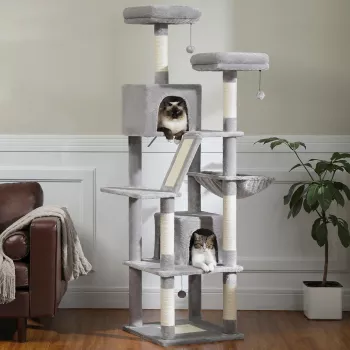
A well-designed cat tree can turn a small indoor space into a complete “cat zone” for climbing, scratching, resting, and observing. Multi-level layouts help cats separate activities—play up high, nap in a covered cave, and scratch on sturdy posts—while also reducing boredom and furniture damage. The right setup supports natural behaviors like stretching, scent marking, and seeking safe vantage points.
Indoor cats don’t stop needing territory—homes just ask them to share it with people, pets, and furniture. A large, vertical cat tree adds usable space without making the room feel crowded.
For a deeper look at why vertical space and choice matter in feline homes, the American Association of Feline Practitioners (AAFP) environmental needs guidelines are a helpful reference.
The most satisfying cat trees combine three “must-haves” in one structure: scratchable posts, a covered retreat, and comfortable resting platforms at more than one height.
| Feature | What it helps with | Good sign to look for |
|---|---|---|
| Multiple scratching posts | Reduces furniture scratching, supports stretching | Posts in more than one location and height |
| Enclosed cave/condo | Security and quiet naps | Opening large enough for turning around comfortably |
| Top perch | Confidence and observation | Wide platform with a stable base |
| Multi-level steps/platforms | Safer climbing, easier access | Shorter jumps between levels |
| Stable base | Prevents wobble and tipping | Broad footprint and solid connectors |
Scratching and enrichment habits can vary by cat, but the underlying needs are consistent. The ASPCA’s cat behavior tips include practical guidance on scratching and home enrichment.
A large cat tree earns its keep when it’s placed where your cat already wants to be. Before assembling, plan the “approach path” and the vertical clearances.
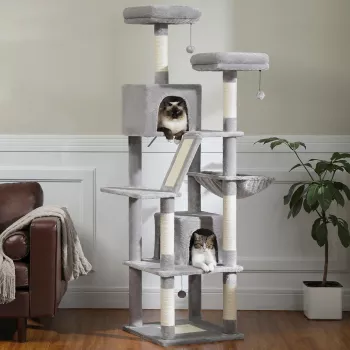
If you’re looking for a single piece that covers the core daily needs—scratch, climb, hide, and lounge—this style of tree is built as an all-in-one activity hub. The Large Multi-Level Cat Tree with Scratching Posts, Caves, and Perches for Indoor Cats offers multiple levels for movement, scratch-friendly posts for natural marking and stretching, and separate resting zones to reduce crowding.
| Home situation | Common cat behavior | How this style of cat tree supports it |
|---|---|---|
| Apartment or limited floor space | Restless pacing, boredom | Vertical climbing and perching without needing extra floor area |
| Cats scratching furniture corners | Scratching for stretch and scent marking | Multiple scratch posts placed on the route cats already travel |
| Shy cat or busy household | Hiding under beds, stress | Covered caves offer a predictable safe retreat |
| High-energy indoor cat | Zoomies and rough play | Platforms and levels support safe jumping and play breaks |
A good height includes at least one elevated perch where your cat can observe the room, while keeping jumps comfortable for their age and mobility. Measure your intended spot (especially near windows) so the top platform clears blinds, curtains, and nearby shelves.
Place the cat tree right next to the couch corner your cat targets, reward any scratching on the posts, and temporarily make the couch less appealing with a cover or deterrent tape. Consistency matters most: keep the scratching posts easy to access and stable so they “feel better” than the couch.
Many cats love covered caves because they provide a predictable, quiet retreat—especially in busy homes. Choose a cave with a roomy opening and place it where your cat feels safe, without blocking the entrance or forcing them inside.










Leave a comment