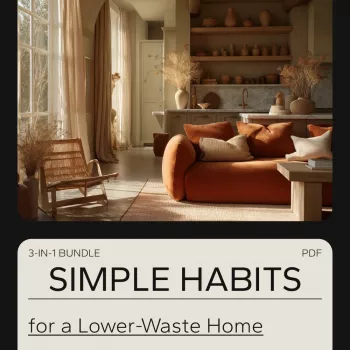
A lower-waste home is built on repeatable routines, not perfection. With a few simple swaps and a “use what you have” mindset, daily life can create less trash while staying practical for busy schedules, families, and small spaces.
Lower-waste living works best as a simple priority list: reduce what enters your home first, reuse what you already have second, and recycle or compost last when options exist. This aligns with the long-standing “reduce, reuse, recycle” framework highlighted by the U.S. Environmental Protection Agency.
It doesn’t require expensive overhauls, a pantry full of matching glass jars, or replacing every product at once. The most noticeable wins often come from fewer single-use items, less food spoilage, and smarter purchasing—especially when you replace things only as they run out.
Progress also looks like consistency. One or two habits per week usually stick better than an all-at-once reset, and those small wins compound quickly.
If you only have a short window today, set up a system that makes the right choice easier than the default choice.
The goal is to reduce decision fatigue. When the system is visible and easy, it becomes automatic.
Some habits are “high impact” because they ride along with routines you already have.
| Habit | What to Do | Effort | Waste Reduced |
|---|---|---|---|
| Use a “one in, one out” pantry rule | Finish open items before buying replacements | Low | Food packaging and expired food |
| Swap paper towels for a cloth system | Keep a stack of rags and a small hamper | Low–Medium | Single-use paper waste |
| Plan 2 flexible meals per week | Cook around what needs using first | Medium | Food waste and takeout packaging |
| Choose refillable hand soap | Refill pouches or bulk refill stations when available | Low | Plastic bottle waste |
| Keep a “leftovers night” | Designate one night to clear the fridge | Low | Food waste |
Kitchens create a lot of waste simply because they’re high-traffic zones: packaging, food scraps, and “mystery leftovers.” Reducing waste here often saves money, too—food waste is a global issue, with measurement efforts tracked in the UNEP Food Waste Index.
One practical tactic: choose two “flex meals” per week (stir-fry, tacos, pasta, grain bowls) that can absorb whatever vegetables or proteins need using first.
Bathrooms are full of small, frequent purchases—so a few slow-and-steady changes make a noticeable dent.
If you prefer step-by-step structure, Simple Habits for a Lower-Waste Home: 3-in-1 Digital Bundle – Guides, eBooks & Checklists is designed for printable-friendly routines, room-by-room actions, and practical shopping habits that reduce disposables.
For households that do well with simple prompts and tracking, AI-Powered Burnout Radar | Digital Checklist for Recognizing Burnout Signs with AI | Wellness Tracker | Mental Health Self-Care Tool | ai help recognizing burnout signs can complement home habit-building by helping you notice when stress is pushing you back into convenience-based choices.
Start with 3–5 low-effort changes: keep a reusable bag and bottle with your daily essentials, set up a “finish-before-new” basket, do one leftovers night, switch paper towels to a simple cloth system, and create a “use-first” fridge shelf. Pick just one habit to lock in first, then add the next.
It doesn’t have to—especially with a “replace as you run out” approach. Preventing food waste and buying fewer duplicates often saves money, and many reusables pay back over time by replacing repeat purchases.
Use shared, simple rules (like “one leftovers night” and “finish open snacks first”), keep a visible checklist, and assign small roles tied to routines (someone resets the shopping kit, someone checks the fridge). During busy weeks, stick to a minimum-viable plan so you don’t restart from zero.












Leave a comment