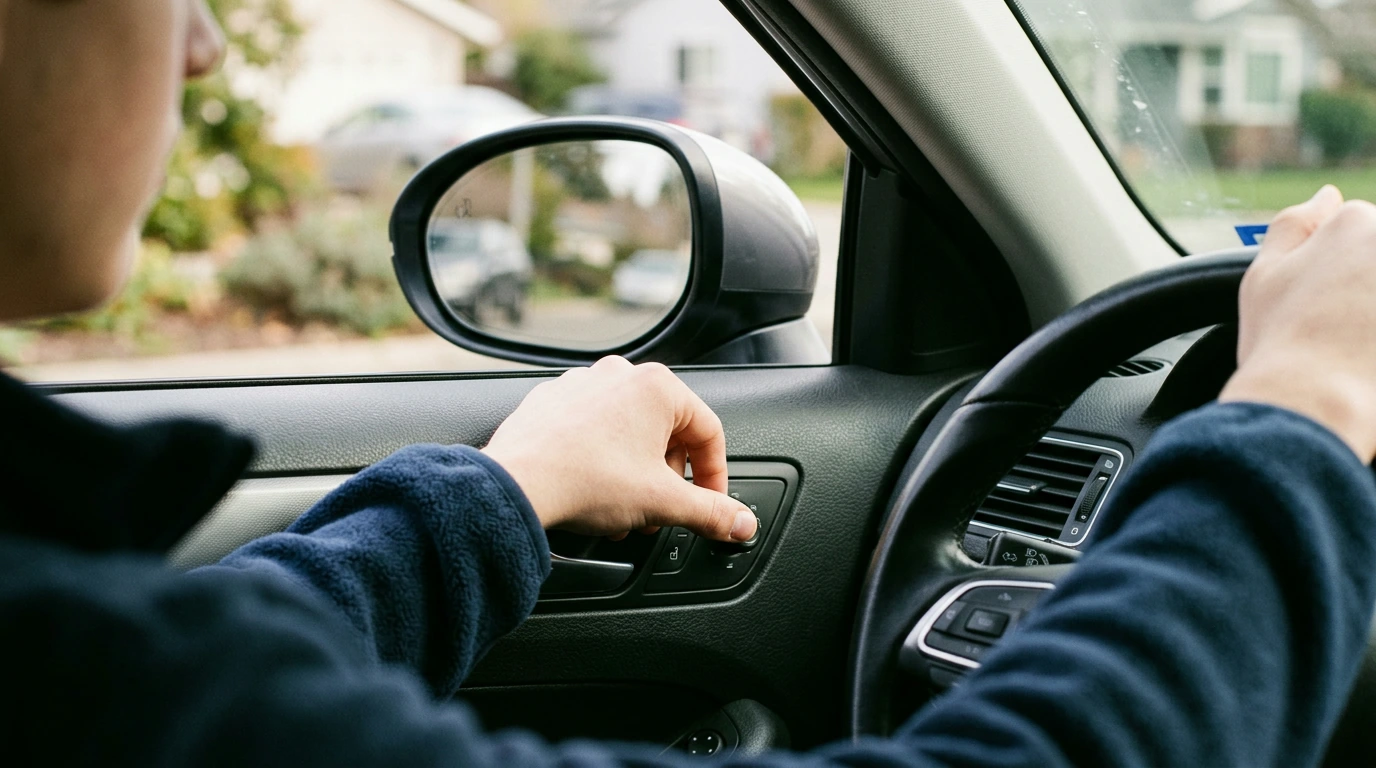
Your first months behind the wheel are about building safe habits, understanding your responsibilities, and knowing what your car insurance covers. Our team recommends getting comfortable with all three before you start driving on your own.
Before each trip, adjust your seat and mirrors, buckle up, put your phone away, and enter your destination while parked. Leave extra following distance, scan ahead for hazards, and slow down for rain, darkness, or unfamiliar roads. Practice parking, merging, and navigating intersections with an experienced driver before tackling busy routes alone.
If you have a learner’s permit or provisional license, you may face limits on passengers, nighttime driving, or phone use. Rules vary by state, so confirm yours with your state’s motor vehicle agency. Keep your license or permit, registration, and proof of insurance accessible whenever you drive.
Liability coverage helps pay for injuries or property damage you cause to others, up to your policy limits. It generally does not pay to repair your own car. Collision coverage can help with crash damage to your vehicle, while comprehensive coverage generally addresses covered non-collision events, such as theft or hail. Both usually have a deductible—the amount you pay toward a covered claim.
When comparing policies, look beyond the monthly premium. Consider coverage limits, deductibles, and whether you need protection for a vehicle you could not afford to repair or replace yourself. If you drive a family member’s car, confirm with the insurer that you are covered under the policy; do not assume occasional access means automatic coverage. Our first-time driver insurance mistakes checklist can help you review common decisions before you commit.
Know how to turn on your hazard lights, where to find your spare tire or tire-repair kit, and whom to call for roadside assistance. If a crash happens, move to a safe location when possible, call emergency services if anyone is hurt, and exchange information with the other driver. Document the scene if it is safe to do so, then contact your insurer promptly.
We want you to start with a simple rule: drive predictably, leave yourself room to react, and ask questions about your coverage before you need to use it.
Keep your vehicle registration and proof of insurance in the car or in an accepted digital format, and carry your license or permit when you drive. Check your state’s rules for any additional requirements.











Leave a comment