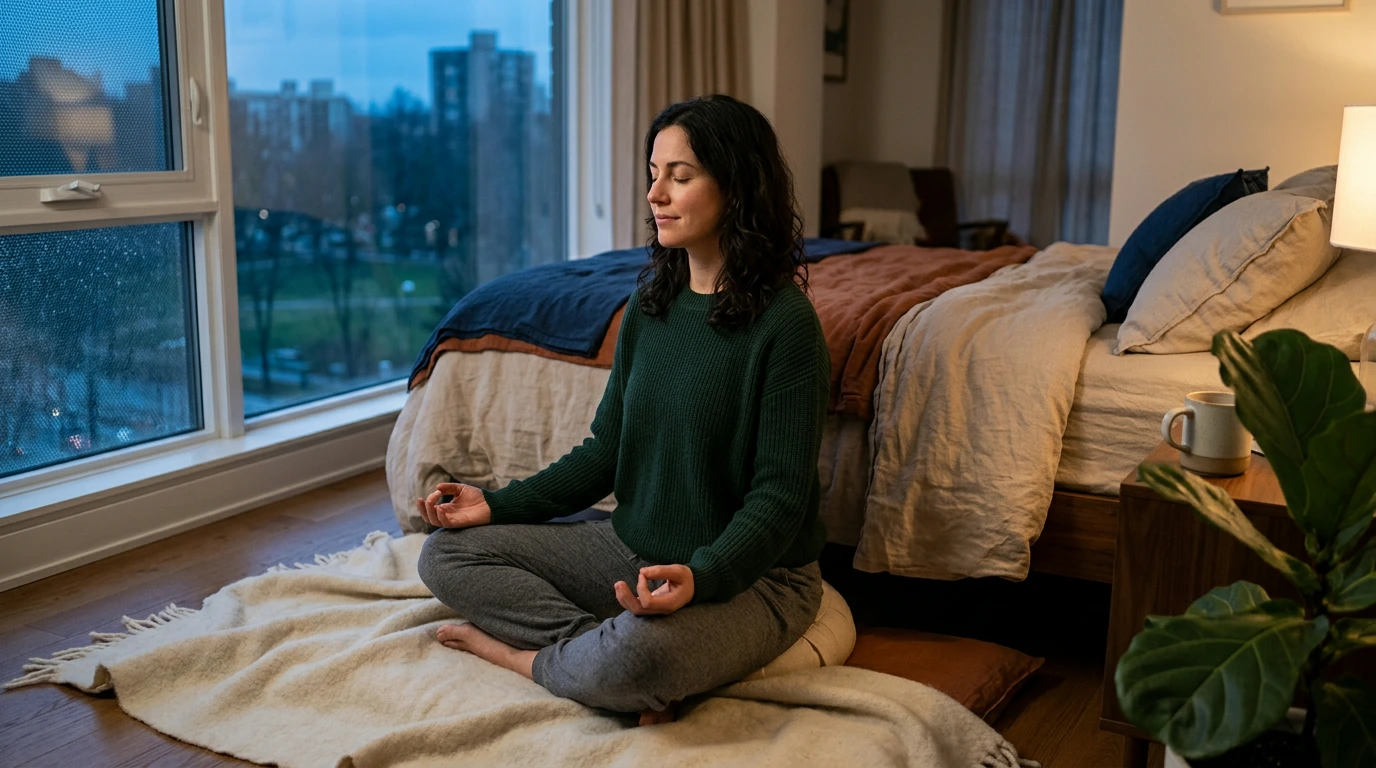
A gentle body scan paired with unforced, steady breathing is a useful place to start. It gives your attention a simple path away from anxious thoughts and toward sensations in the present moment, without requiring you to clear your mind or fall asleep on command.
Settle into a comfortable position and let your breathing stay natural. Starting at your feet, notice any sensations—such as warmth, pressure, or tingling—then gradually move your attention up through your legs, torso, arms, and face. If your mind wanders, notice that without judgment and return to the area you were scanning.
As you scan, notice the breath moving in and out. You can make your exhale slightly longer if that feels comfortable, but don’t force deep breaths or hold your breath. If focusing on breathing makes you feel more anxious, open your eyes and name a few neutral things you can see or feel instead.
Consistency matters more than finding a perfect technique. Try this sequence for five to ten minutes, or use a brief guided meditation if it’s easier to follow someone’s voice than to practice alone. A quiet, familiar routine can help you transition toward rest, though meditation doesn’t guarantee sleep or replace care for ongoing anxiety.
If you want several ways to shape a nighttime routine, explore our Deep Rest Sleep Meditation Toolkit 5-in-1 Night Bundle guide. Choose an approach that feels soothing rather than demanding, and adjust or stop if a practice increases your discomfort.
You don’t need to measure success by how quickly you fall asleep. Even a few minutes of relaxed attention can be a worthwhile pause in your evening. If anxiety regularly disrupts your sleep or affects daily life, consider speaking with a qualified health professional alongside using relaxation practices.
Start with five to ten minutes and extend the practice only if it feels helpful. A short, repeatable session is often easier to maintain than a long one.











Leave a comment